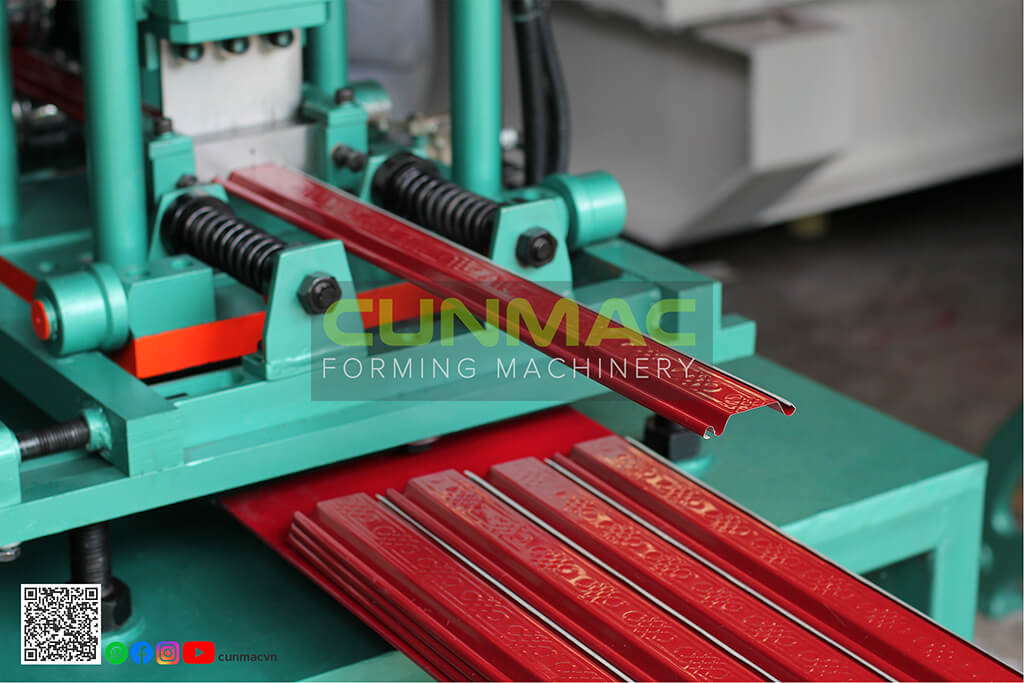
Ceiling Battens, Roof Battens and Top Hats: Differences, Sizes, Applications and Production Notes
Introduction
Ceiling battens, roof battens and top hat channels are commonly used in modern lightweight steel framing systems. They may look similar at first glance, but each profile is designed for a different role in a building system.
In simple terms, ceiling battens support ceiling linings, roof battens support roofing materials, and top hats are often used as secondary framing members for wall cladding, facade systems and some roofing or shed applications. Understanding these differences helps contractors, builders and manufacturers choose the right profile for the right application.
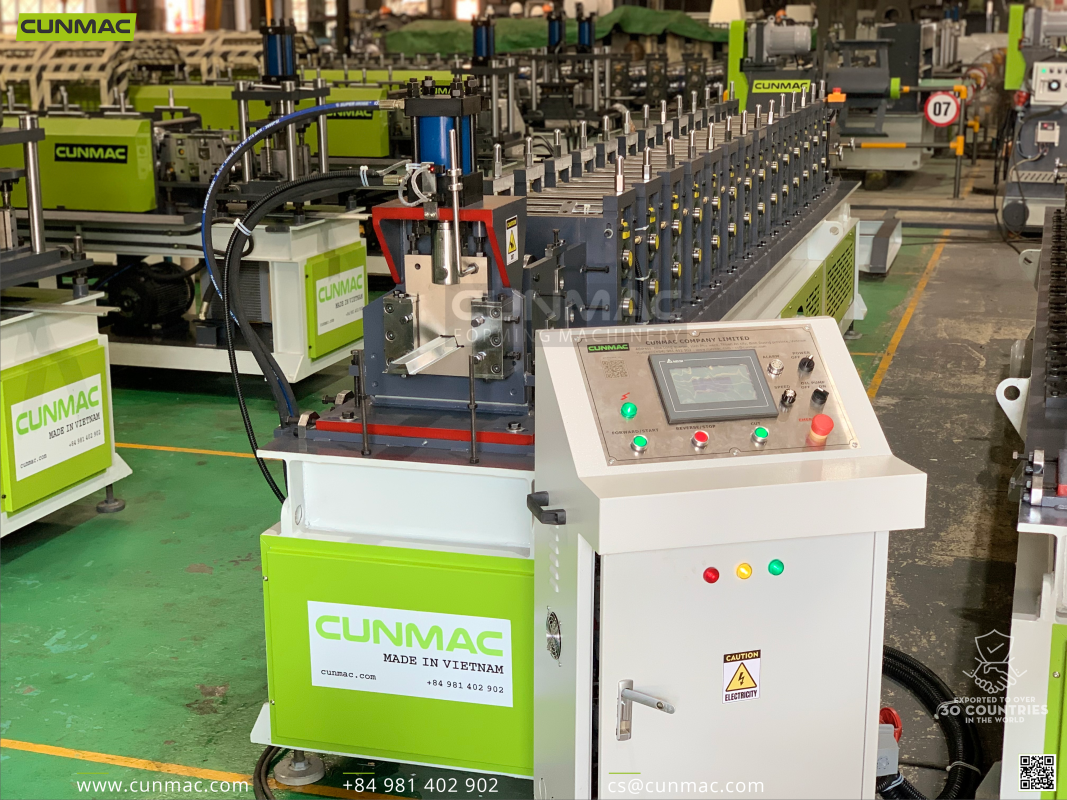
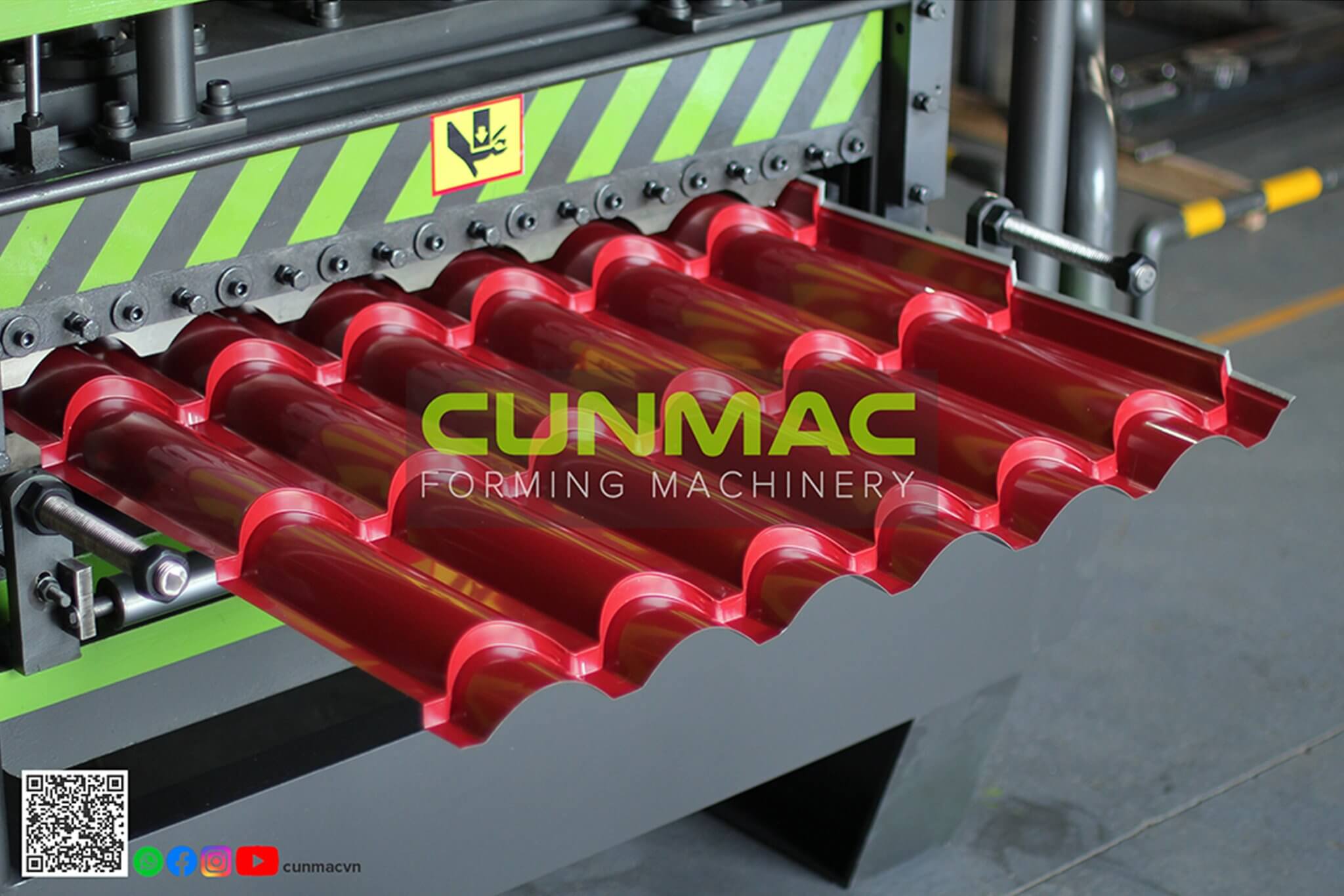
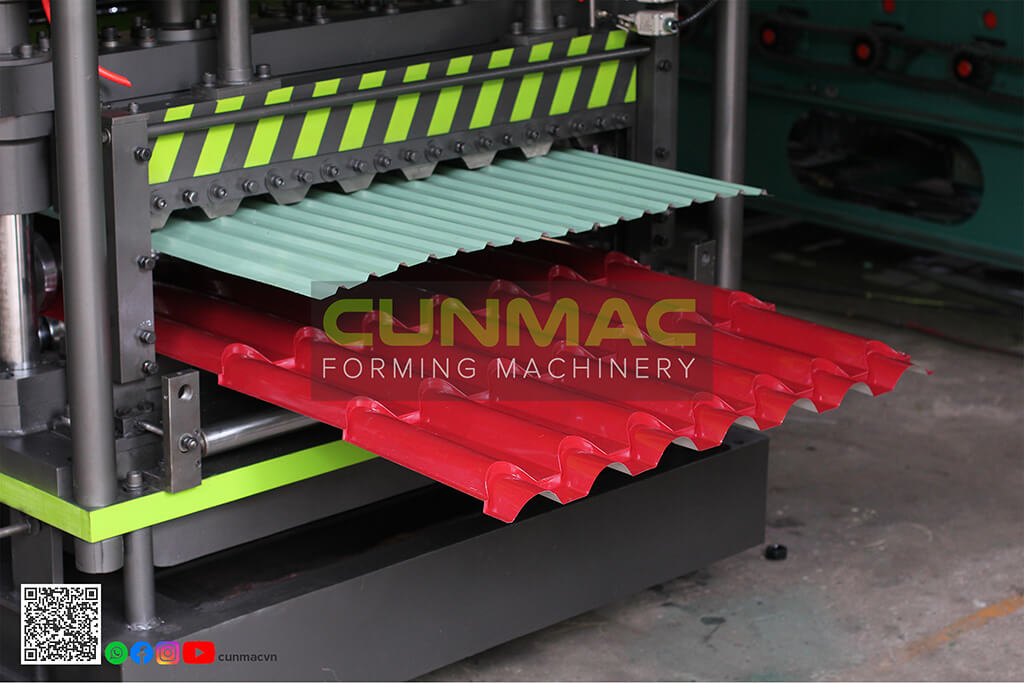
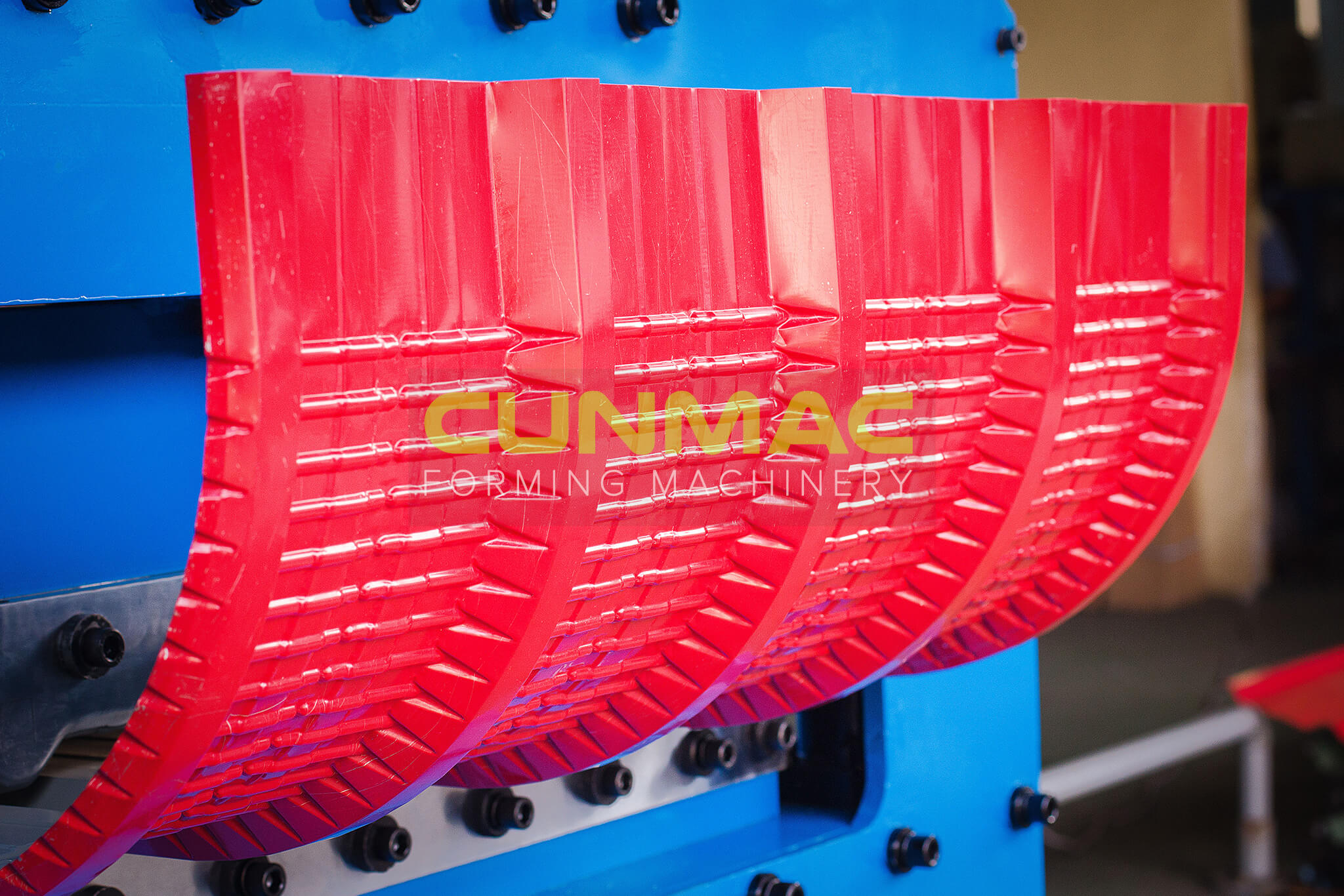
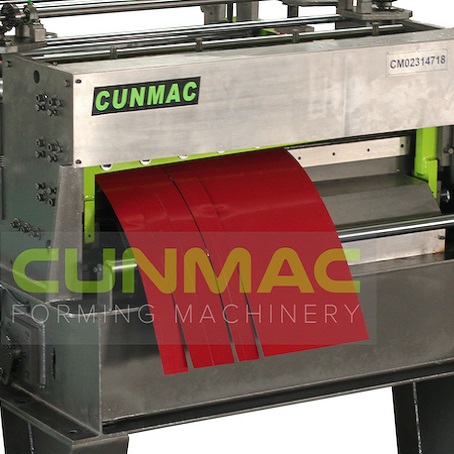
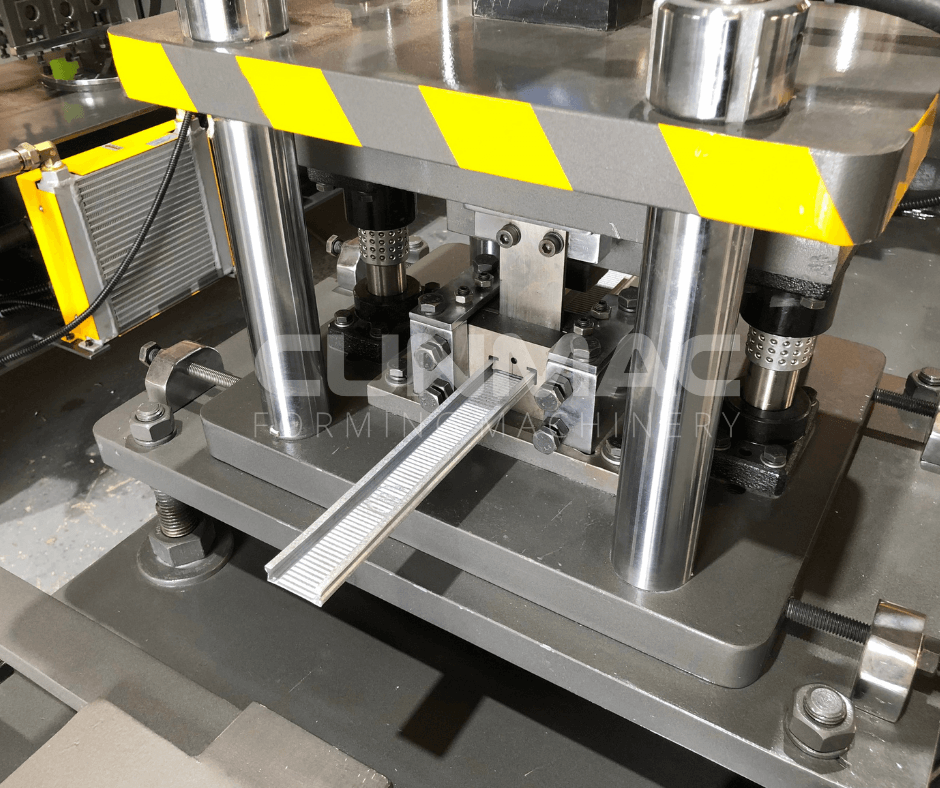
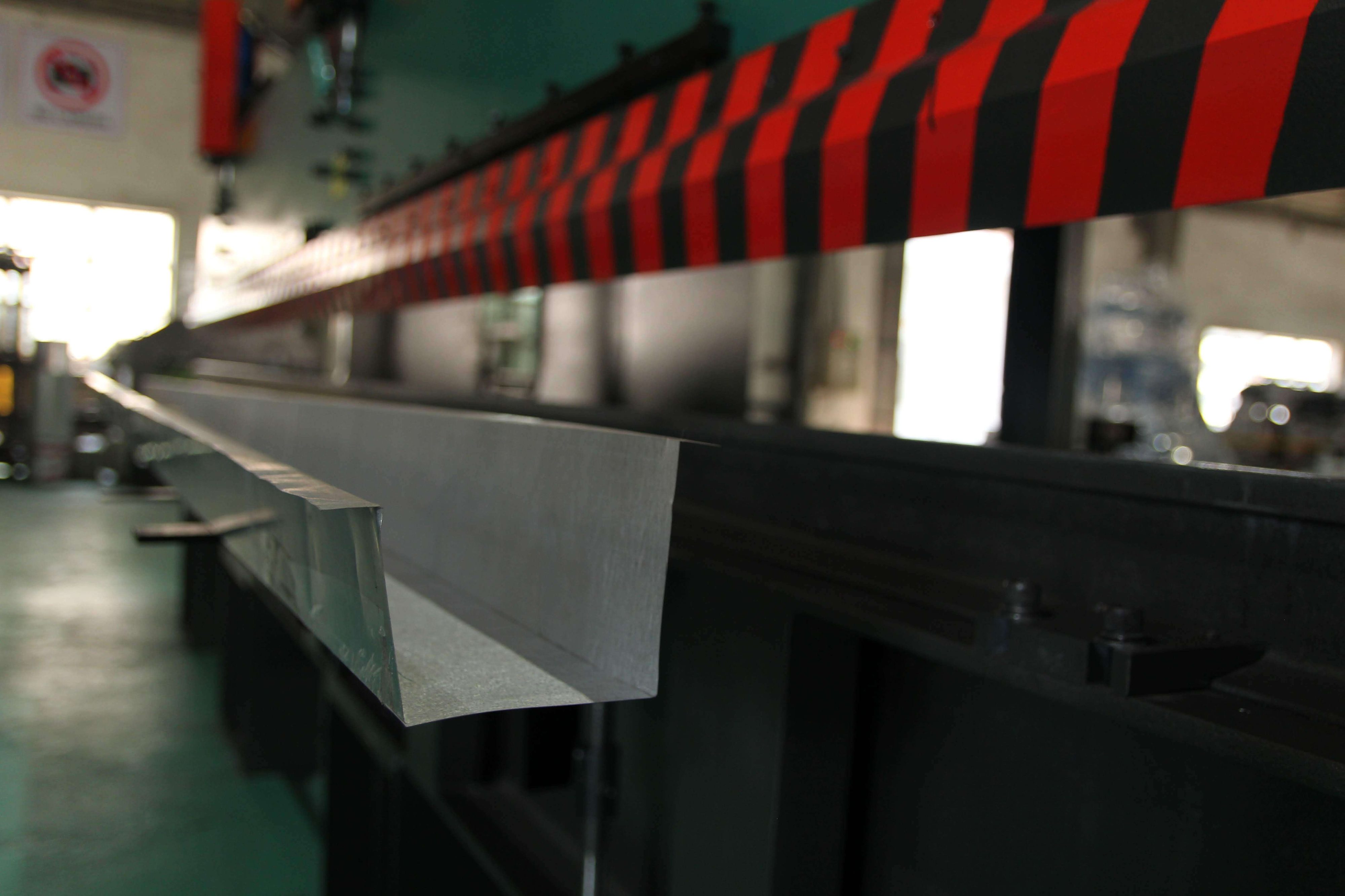
Roll forming line used for batten and top hat profile production
What Are Ceiling Battens?
Ceiling battens are lightweight steel members used to create a supporting framework for ceiling linings. They are commonly installed below roof trusses, joists or other structural members to provide a straight and level fixing surface for plasterboard, gypsum boards, metal ceiling panels or decorative ceiling materials.
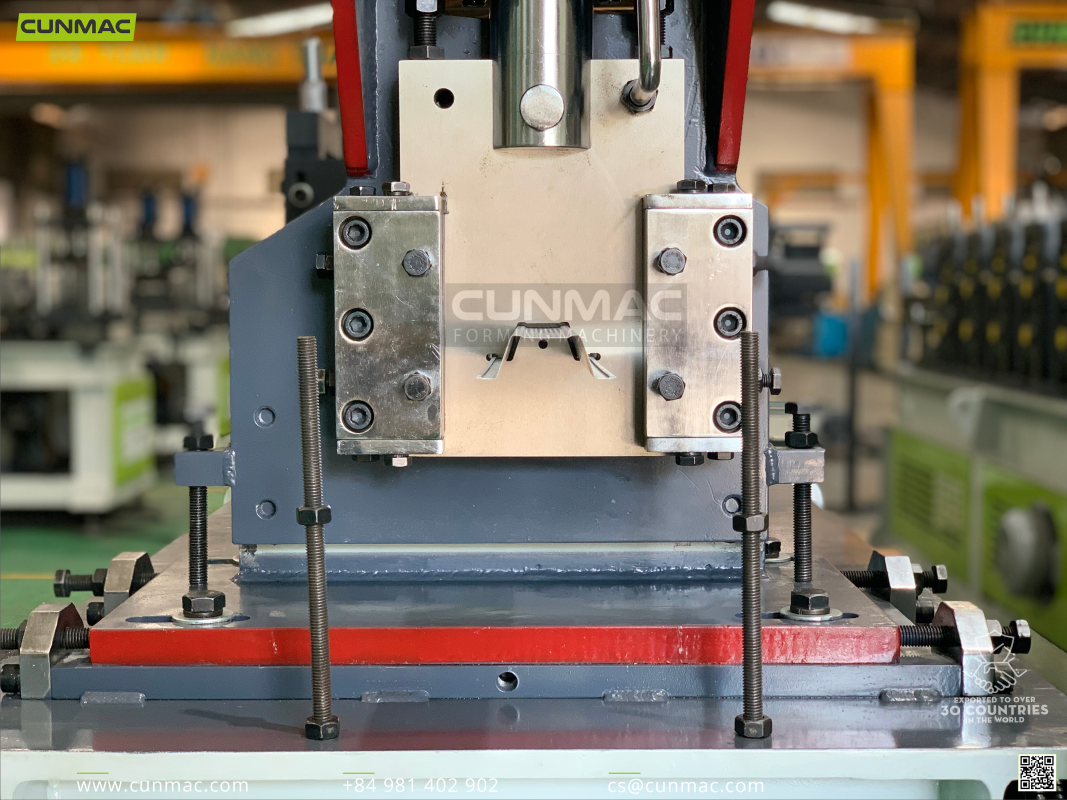
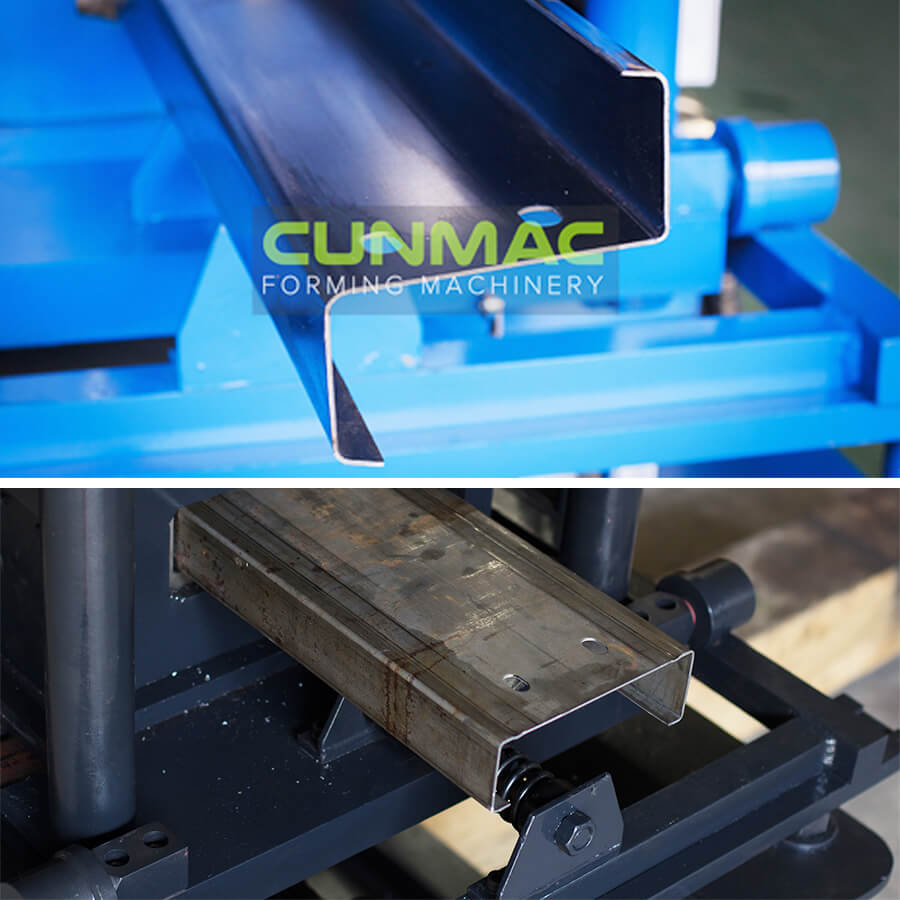
Ceiling batten profile 22mm commonly used
Ceiling battens are typically used in:
- Residential ceiling systems
- Offices and commercial interiors
- Suspended or direct-fixed ceiling frameworks
- Projects where consistent alignment and a lightweight framing solution are required
Because ceiling battens are usually used for lining support rather than primary structural support, the most important considerations are profile straightness, dimensional consistency, coating suitability and correct installation spacing.
What Are Roof Battens?
Roof battens are installed over rafters, trusses or roof framing to provide a fixing base for roofing sheets, roof tiles or other roof coverings. Compared with ceiling battens, roof battens generally need to withstand more demanding service conditions, because they are part of the roof support system.
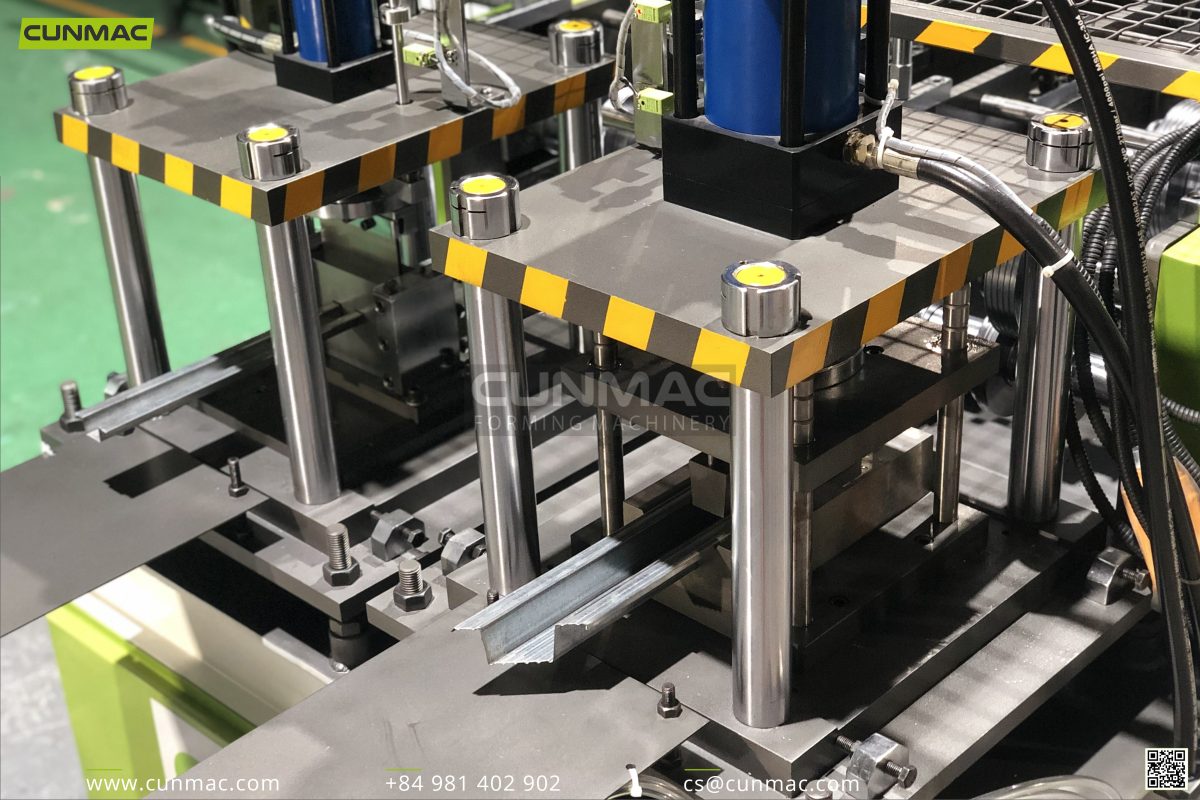
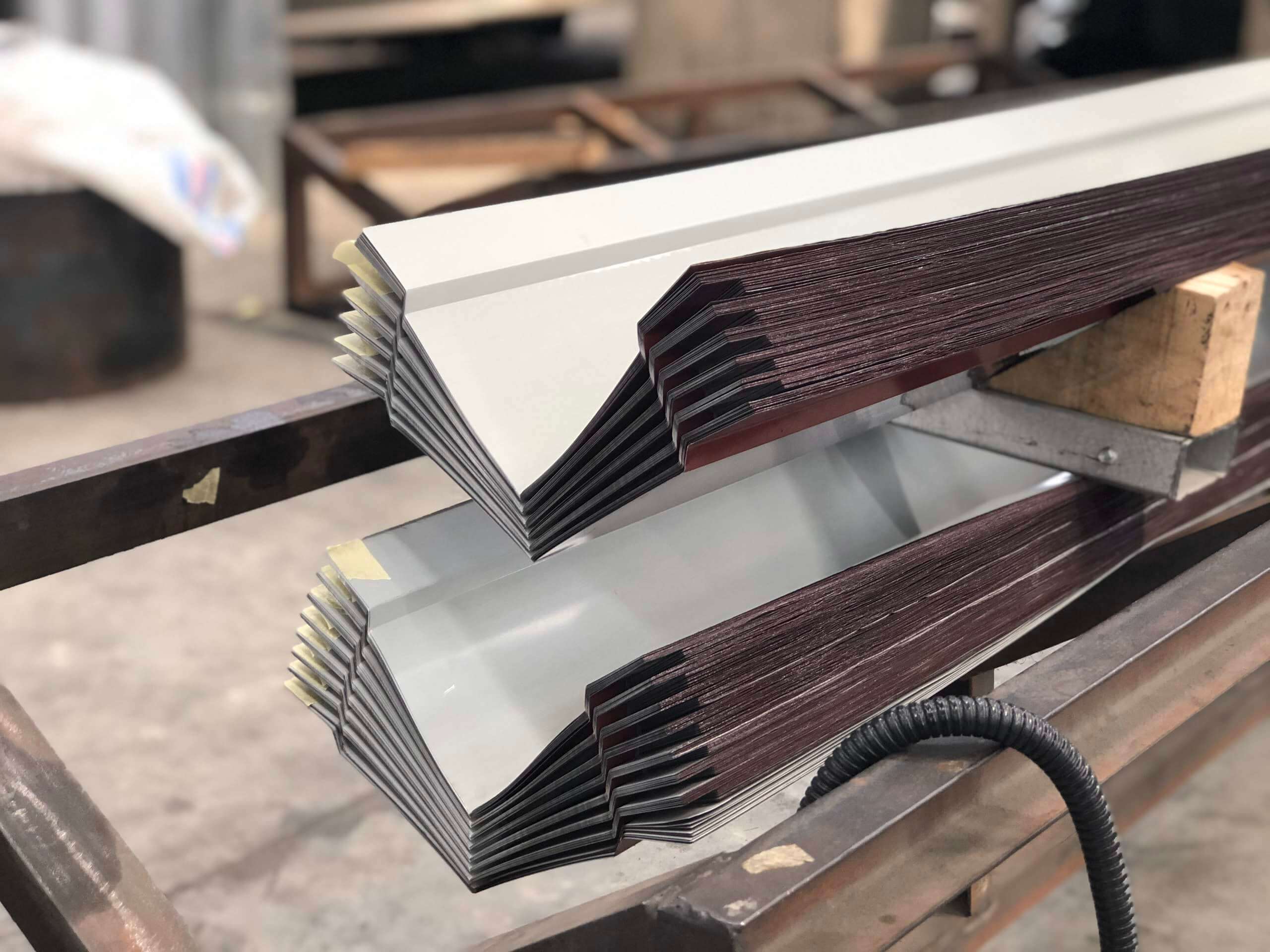
Roof batten TS40 (40mm) with 45-degree cutting
Roof battens are commonly used in:
- Residential roof structures
- Warehouses and factories
- Agricultural and industrial buildings
- Metal roofing or tile roofing systems
What Are Top Hat Channels?
Top hats, also called top hat channels or top hat battens, are named after their hat-like or omega-style cross section. They are often used as secondary members for supporting roof or wall cladding and as sub-framing for facade or partition systems.
Top hats are commonly used in:
- Wall cladding systems
- Facade sub-framing
- Industrial, commercial and agricultural buildings
- Partition walls and lining support
- Shed and light steel framing applications
Top hats are available in different depths and thicknesses depending on the supplier and application. Common search terms include 64mm top hat, 96mm top hat and 120mm top hat. These sizes should not be treated as interchangeable: a deeper or thicker top hat can provide different spanning capacity, stiffness and installation behavior.
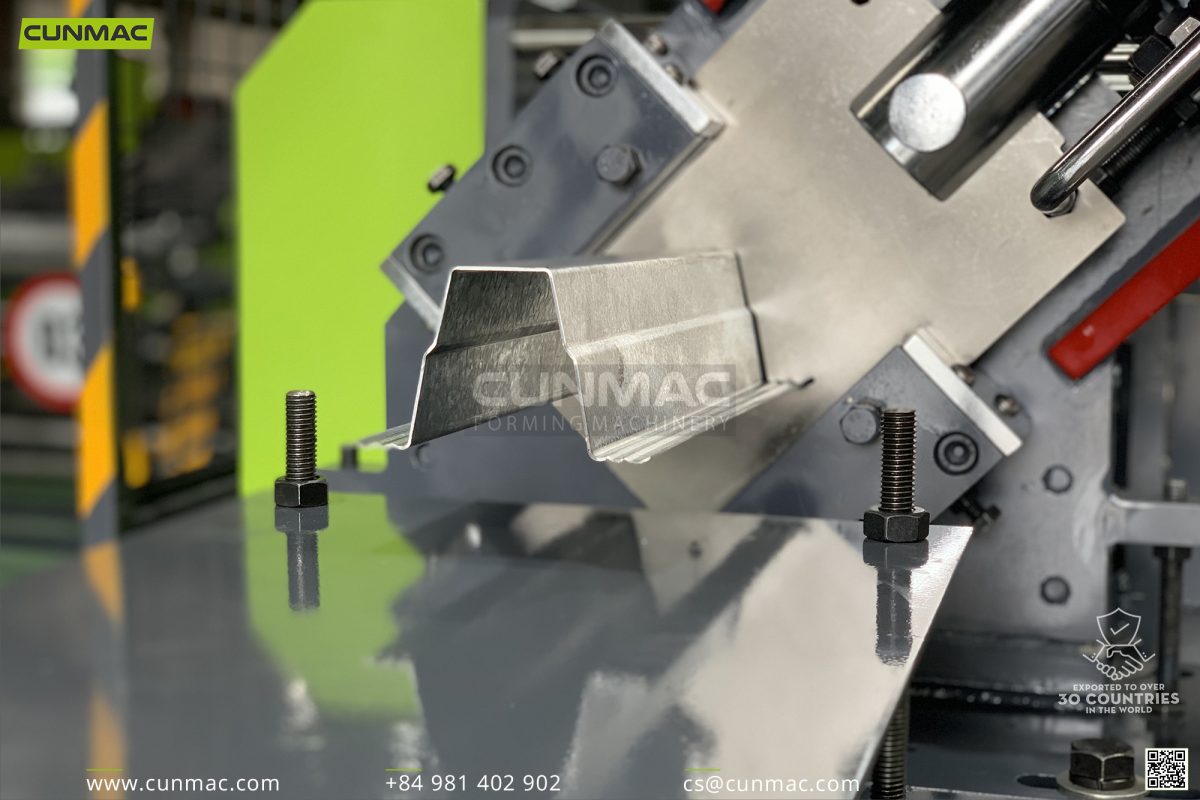
Learn More: Batten / Top hat / Reng roll forming machine
Ceiling Battens vs Roof Battens vs Top Hats
The table below summarizes the practical differences between the three profiles.
|
Item |
Ceiling battens |
Roof battens |
Top hats |
|
Main purpose |
Support ceiling linings |
Support roofing materials |
Secondary framing for roof, wall or cladding systems |
|
Common application |
Suspended ceilings, plasterboard ceilings, interior lining |
Metal roofing, roof tiles, roof sheeting |
Facades, wall cladding, partitions, sheds, industrial buildings |
|
Typical design priority |
Straightness, light weight, easy installation |
Strength, fastening performance, roof load requirements |
Dimensional stability, depth, spanning capacity, cladding support |
|
Load condition |
Usually lighter lining support |
More demanding roof service conditions |
Depends on wall, roof or cladding application |
|
Selection note |
Check ceiling lining type and fixing spacing |
Check roof system, wind load and batten spacing |
Check depth, thickness, span and cladding requirements |
Common Top Hat Sizes: 64mm, 96mm and 120mm
Top hat sizes are often described by their profile depth or height. In many product ranges, 64mm top hat, 96mm top hat and 120mm top hat are common keywords used by contractors, engineers and manufacturers.
A general way to understand them is:
- 64mm top hat: often selected where a moderate cavity or lower profile depth is needed.
- 96mm top hat: commonly used when a deeper profile is required for additional spacing or stiffness.
120mm top hat: often used for larger spacing requirements, heavier cladding conditions or applications needing a deeper secondary member.
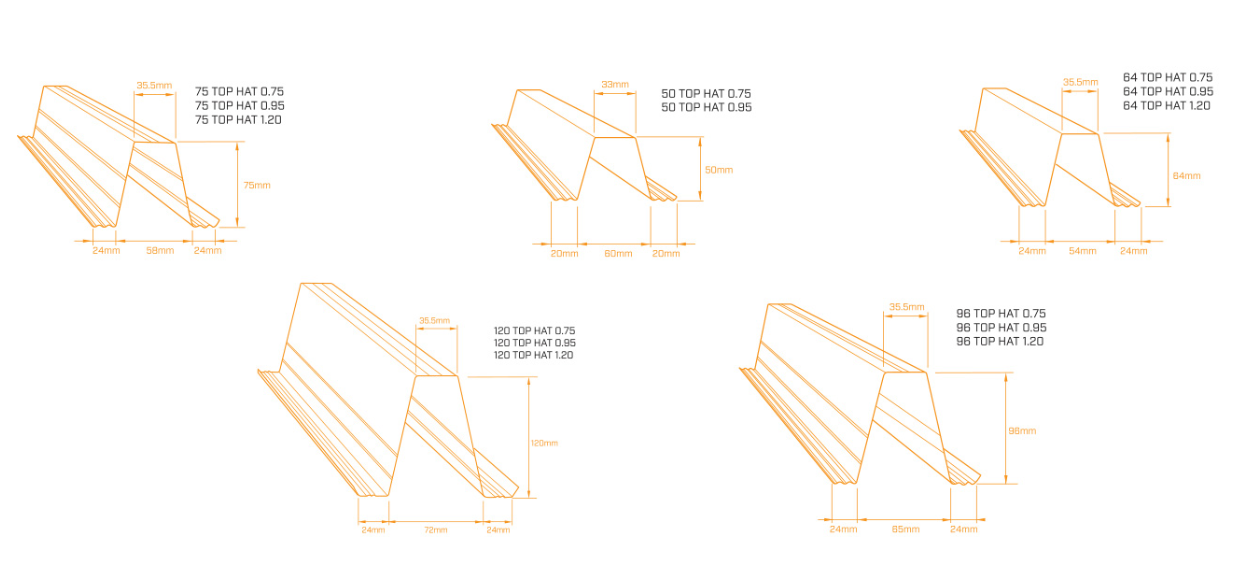
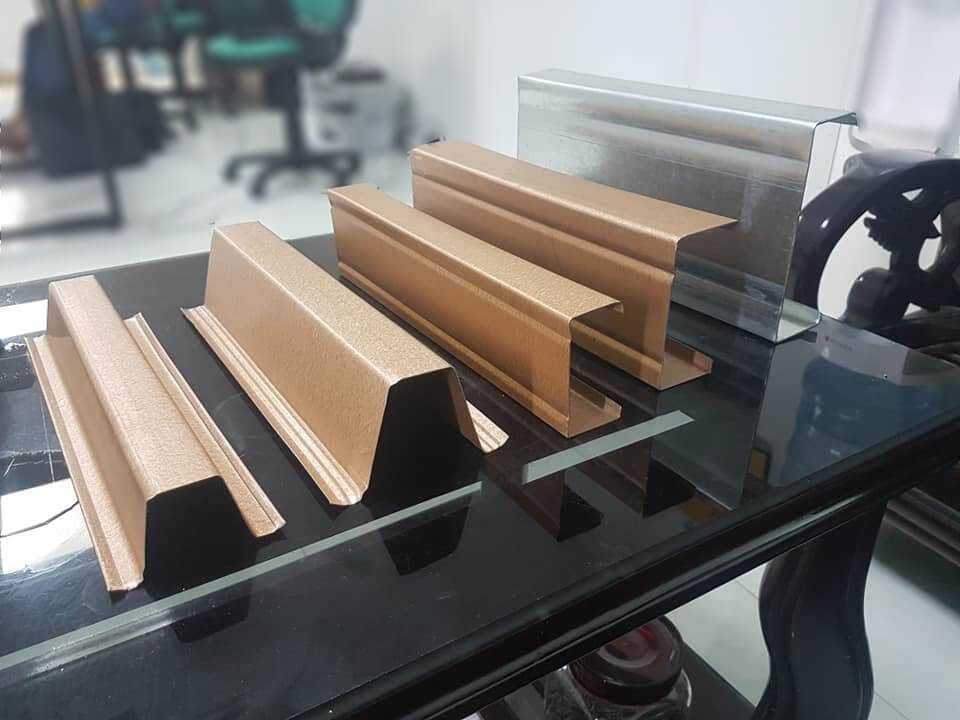
Top hat profile sizes, including 64mm, 96mm and 120mm top hat profiles
Actual performance depends on the complete specification, including steel grade, base metal thickness, coating, span, support condition, fastener type and project loading. For this reason, builders should always refer to supplier capacity tables and local engineering requirements before choosing a size.
Material and Coating Considerations
Many steel battens and top hats are manufactured from high-tensile galvanized or zinc-aluminium coated steel. Public product literature from Australian suppliers commonly refers to steel grades such as G550 or G500 and coatings such as AZ150 zinc-aluminium alloy or Z350 galvanised coating, depending on the product range and application.
When choosing ceiling battens, roof battens or top hats, important material considerations include:
- Base metal thickness.
- Steel grade and mechanical properties.
- Corrosion protection coating.
- Compatibility with connected materials.
- Environmental conditions, especially marine, industrial or corrosive locations.
- Compliance with local standards and project specifications.
Material compatibility is especially important. Some manufacturer guides warn against using coated steel battens in direct contact with incompatible materials such as lead, copper, bare steel, stainless steel, mortar, concrete or certain chemically treated timbers. Always check the relevant supplier guide before installation.
Applications in Building Projects
Ceiling Systems
Ceiling battens provide a consistent fixing framework for internal ceiling boards and panels. They help installers create straight ceiling lines and can reduce unevenness caused by variations in the supporting structure.
Roofing Systems
Roof battens create a fixing base for roof cladding or tiles. Their spacing and capacity should be selected based on roofing material, support spacing, wind conditions and installation requirements.
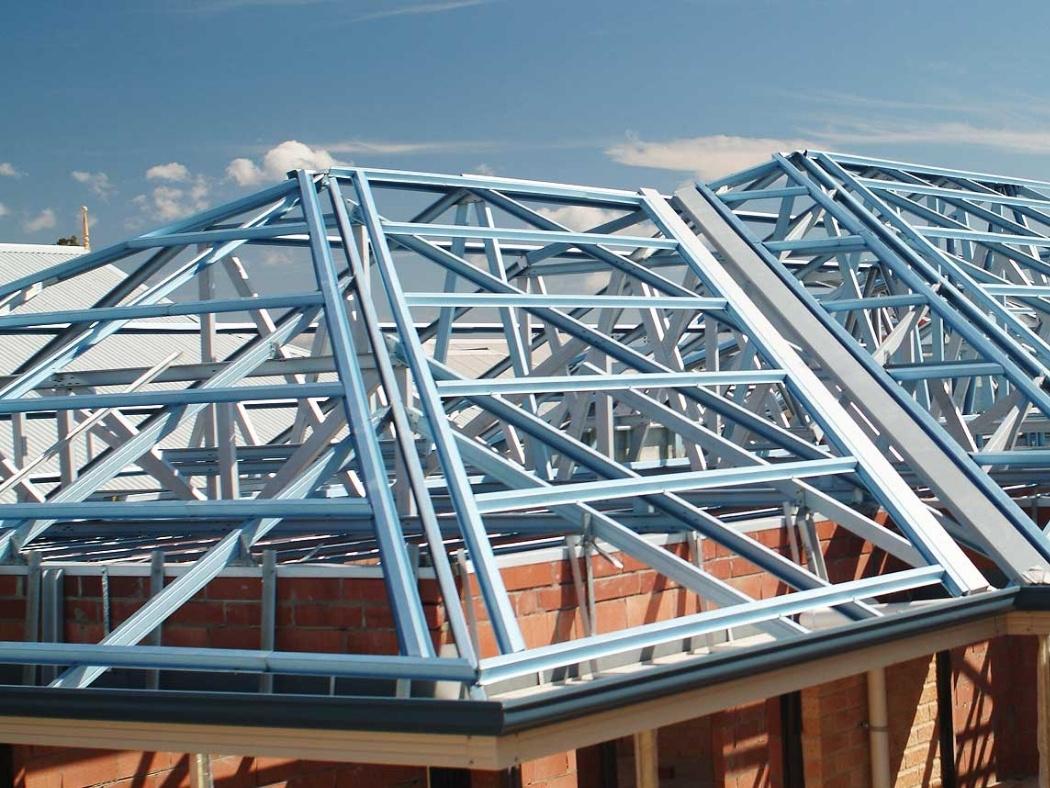
Top hat batten application for roofing in reality
Wall Cladding and Facade Systems
Top hat channels are frequently used as secondary framing behind wall cladding or facade panels. They can help create a cavity, improve alignment and provide a stable fixing surface for cladding materials.
How These Profiles Are Produced
Ceiling battens, roof battens and top hats are commonly produced by roll forming. In this process, a steel coil is fed through a series of rollers that gradually shape the strip into the required profile. The formed profile is then cut to length according to the required specification.
A typical production line may include:
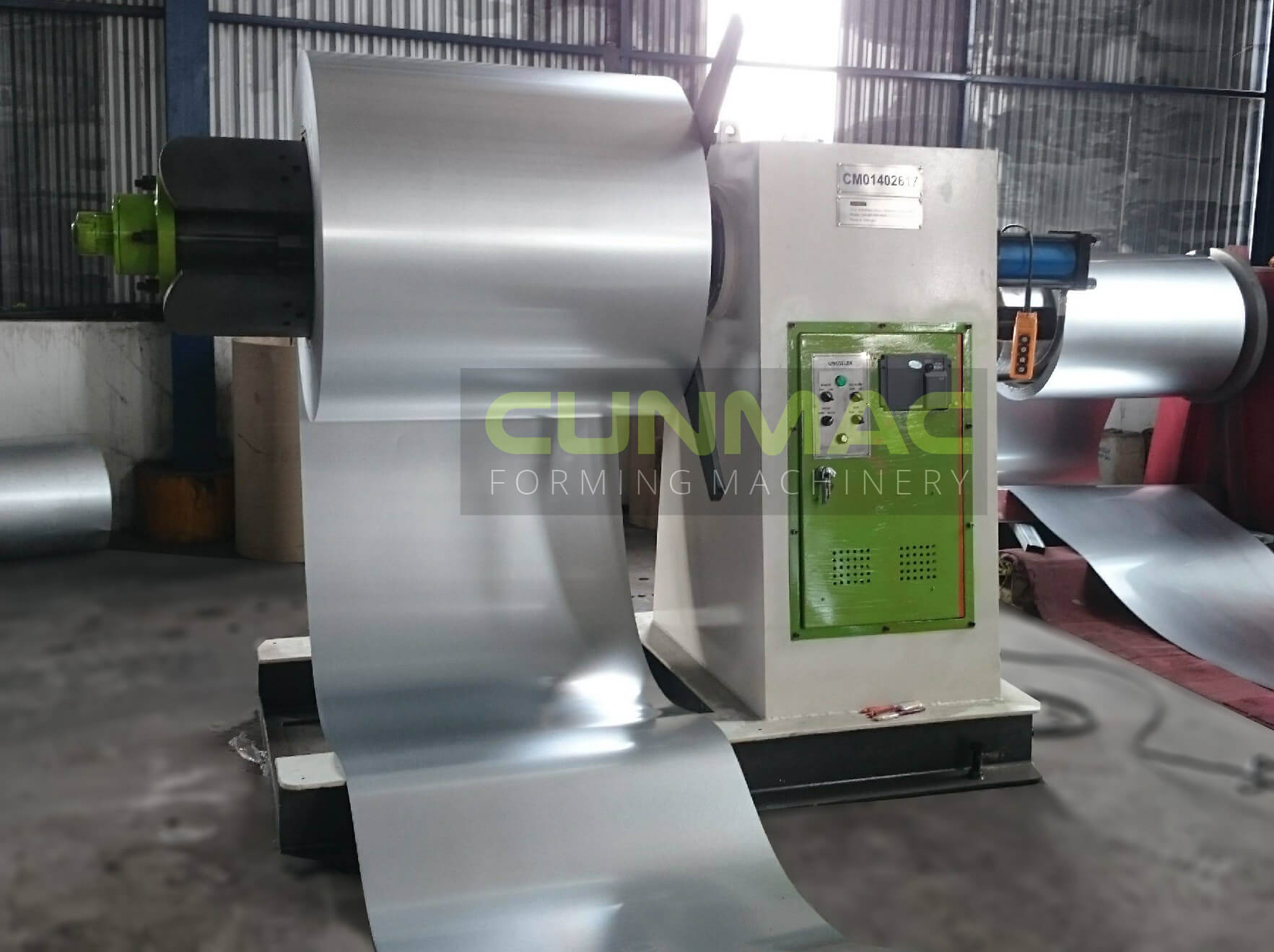
- Decoiler for coil loading and feeding.
- Leveling or guiding system.
- Roll forming stations.
- Cutting system.
- Run-out table for finished products.
- PLC control system for length and quantity settings.
What to Check Before Selecting a Batten or Top Hat Profile
Before choosing a ceiling batten, roof batten or top hat channel, consider the following points:
- Application: ceiling lining, roof covering, wall cladding, facade or partition system.
- Load requirements: wind load, cladding weight, support spacing and service condition.
- Profile size: depth, flange width, lip details and overall geometry.
- Material specification: steel grade, thickness and coating.
- Installation method: fastener type, fixing spacing and compatibility with connected materials.
- Environment: inland, industrial, marine or corrosive exposure.
- Supplier documentation: capacity tables, installation manuals and compliance information.
Choosing based only on appearance or price can create long-term issues, especially in roof and facade systems where load capacity and corrosion resistance matter.
Notes for Manufacturers
For manufacturers, the correct production setup depends on the target product range. Ceiling battens typically prioritize fast, consistent output for lightweight profiles. Roof battens may require a stronger forming setup depending on thickness and profile design. Top hats require accurate forming to maintain shape stability, especially for deeper profiles such as 96mm and 120mm top hats.
A suitable roll forming solution should be selected after confirming:
- Target profile drawings
- Coil material and thickness range
- Required production speed
- Cutting tolerance
- Changeover requirements between sizes
- Available factory space and labor setup
This is where an experienced roll forming machine supplier can help translate product requirements into a practical production line design.
Read more: Batten / Top hat / Reng roll forming machine
CUNMAC Roll Forming Machinery
CUNMAC Co., Ltd is a leading manufacturer of cold roll forming solutions, specializing in machines for ceiling battens, roof battens, and top hats for the modern construction industry.
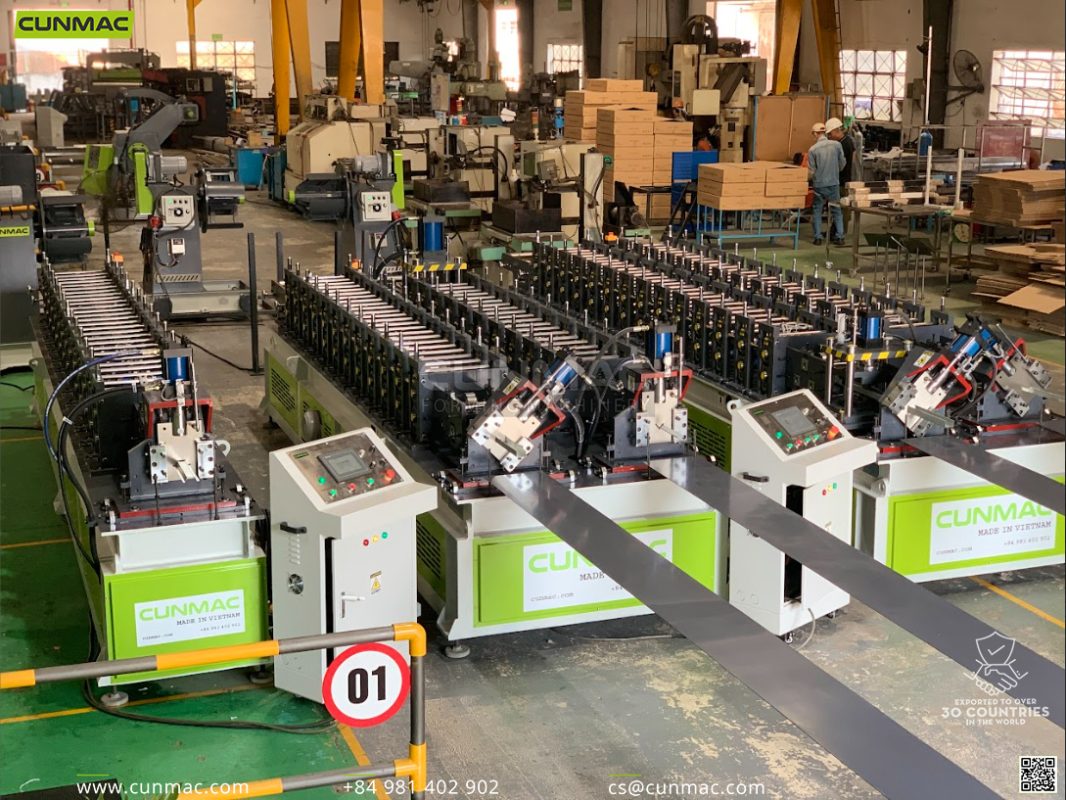
Batten and top hat production lines at CUNMAC Factory
With over 15 years of experience, we have built a strong reputation for delivering high-quality, flexible, and customized roll forming solutions to customers in more than 30 countries worldwide: America, Mexico, Italy, France, Ireland, UK, Australia, India, Angola,, Ivory Coast, Korea, Thailand, Myanmar, Indonesia, Malaysia…
All CUNMAC machines are professionally manufactured in Vietnam, with a focus on durability, precision, and adaptability. Our goal is to provide high-performance machines with optimized design, helping customers improve productivity and gain competitive advantages in the market.